
Fixed and Removable Solutions, Advantages, Disadvantages, and How to Choose the Right Option for You
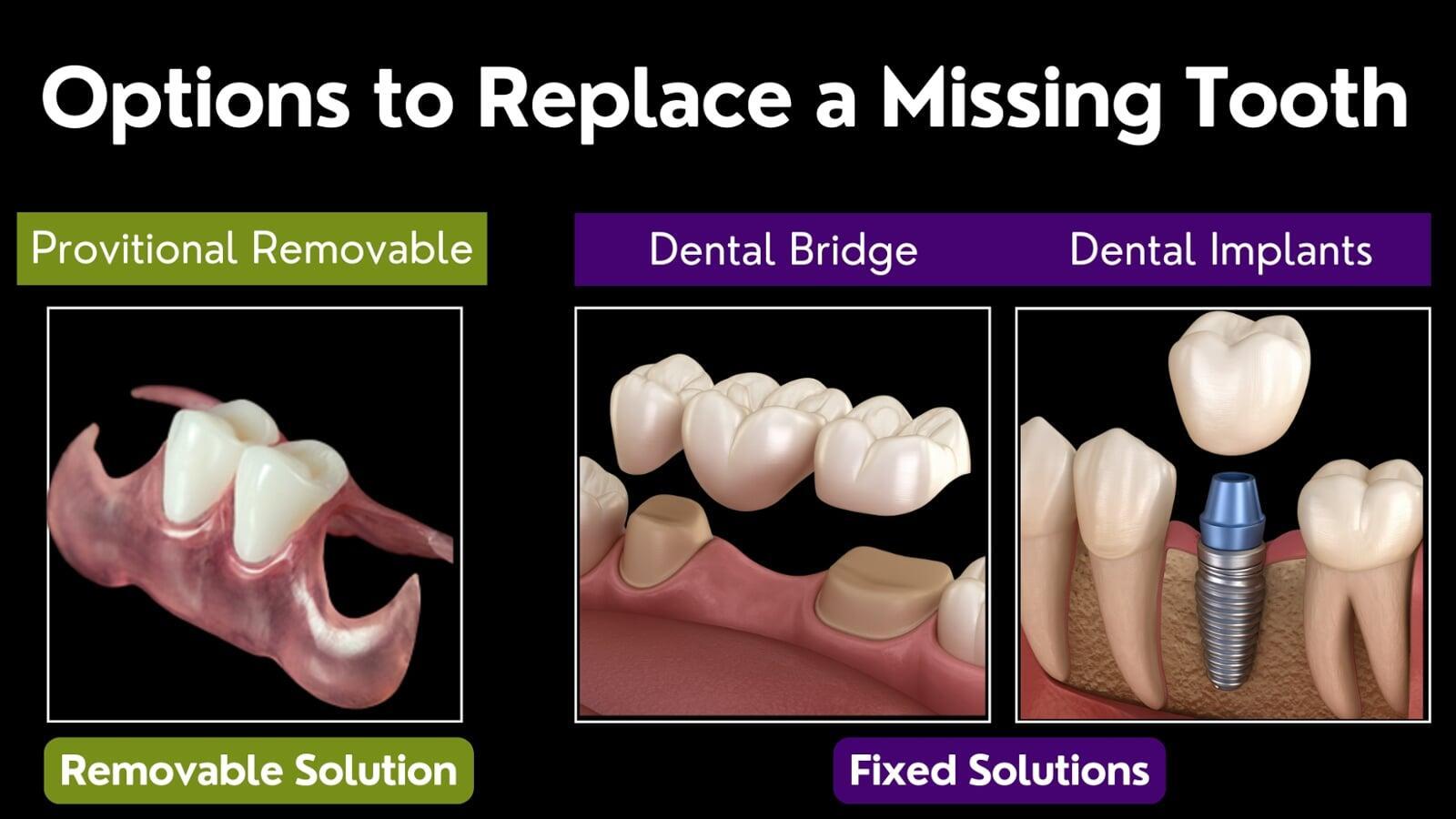
1. Removable Solutions: Partial Dentures
Advantages of Partial Dentures
- Long-Term Stability: Fuses with the bone through osseointegration.
- Natural Aesthetics: Looks and feels like a natural tooth.
- Preserves Bone: Prevents jawbone resorption.
- Independent Support: Does not rely on or damage adjacent teeth.
- High Success Rate: Over 95% success in healthy patients.
Disadvantages of Partial Dentures
- Less stability: They may move during talking or eating.
Limited aesthetics: Metal clasps can be visible when smiling.
Lower comfort: Some patients find them bulky or irritating.
No bone preservation: Bone loss continues over time because no artificial root is placed.
Reduced chewing strength: Not suitable for hard foods or long-term heavy function.
When Are Partial Dentures the Best Option?
Choose partial dentures if:
You need a quick and affordable temporary or long-term solution.
You are not a candidate for surgery this moment.
You want a transition option before implants or a complete smile makeover.
You prefer something non-invasive with minimal procedures.
2. Fixed Solutions
Fixed solutions stay in the mouth permanently and offer superior comfort, aesthetics, and function. The two main fixed treatments are dental bridges and dental implants.
A. Dental Bridges (Fixed but Not Implant-Based)
A dental bridge replaces one or more missing teeth by using the neighboring teeth as anchors. The dentist prepares the adjacent teeth by reshaping them to place crowns that support an artificial tooth (pontic).
Advantages of Dental Bridges
- Fast treatment: Completed in 1–3 visits.
- More affordable than implants: Good mid-range solution.
- Natural appearance: Blends well with natural teeth.
- No surgery required: Ideal for patients who cannot receive implants.
Disadvantages of Dental Bridges
Requires cutting healthy teeth: Adjacent teeth must be shaved down.
Higher risk of decay and fractures on the supporting teeth.
Does not preserve bone: Bone under the missing tooth will continue to resorb.
Shorter lifespan: Typically lasts 7–12 years with good care.
When Are Dental Bridges the Best Option?
Choose a bridge if:
Adjacent teeth already need crowns.
You prefer not to undergo surgery.
You want a quick, fixed solution without implants.
You have limited bone and prefer not to graft.
B. Dental Implants (Fixed and Permanent)
Dental implants are titanium posts placed into the jawbone that function like artificial tooth roots. Once integrated, they support a crown, bridge, or full-arch prosthesis (All-on-4).
Advantages of Dental Implants
- Most durable and long-lasting tooth replacement option.
Prevents bone loss: Stimulates and preserves jawbone.
Does not damage adjacent teeth: Unlike bridges.
Superior chewing power: Closest to natural teeth.
High aesthetic quality: Looks and feels completely natural.
High success rate: Over 95% in healthy patients.
Disadvantages of Dental Implants
Higher initial cost: Although long-term value is greater.
Requires surgery: Not everyone is a candidate without preparation.
Healing time required: Before final restoration.
When Are Dental Implants the Best Option?
Choose implants if:
You want the most stable, long-lasting solution.
You want to preserve bone and facial structure.
You need a single tooth replacement or a full-mouth restoration.
Your priority is natural aesthetics and full function.
You prefer a fixed solution that feels like real teeth.
Conclusion: Which Option Is Right for You?
If you want the most affordable and non-invasive solution → choose removable partial dentures.
If you want a fixed solution without surgery and your adjacent teeth need crowns → a dental bridge may be ideal.
If you want the best long-term results, stronger function, and bone preservation → dental implants are the superior choice.
Every mouth is different, and the best treatment depends on bone structure, number of missing teeth, budget, and long-term goals.
Conclusion: Which Option Is Right for You?
We offer online consultations where you can send photos, X-rays, and questions. Our specialists will provide a personalized evaluation and explain the best options for your smile.
Start your smile transformation today with a professional online consultation.