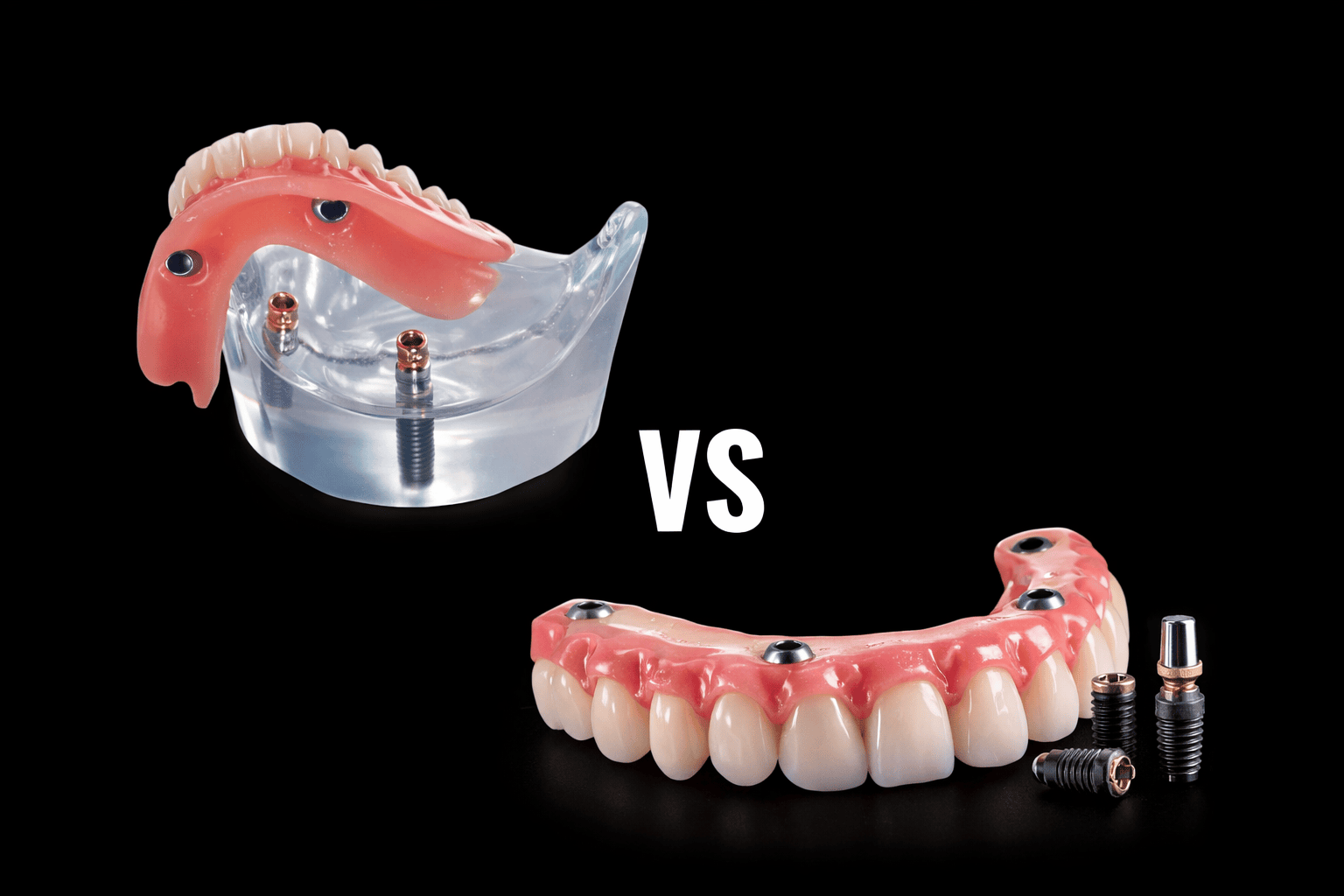
All on 4 vs. Snap on: The Real Difference
All on 4 vs. Snap on for Eating Comfort
When patients compare All on 4 with Snap on, eating is usually one of the first concerns. Meals are deeply personal. They affect comfort, confidence, social life, and even the small pleasures of everyday routine. Most people are not only asking how a smile looks. They are asking how it feels when enjoying dinner with friends, ordering at a restaurant, or biting into foods they have been avoiding.
The fixed option usually offers a stronger sense of stability while chewing. Many patients feel more comfortable with foods that require a firmer bite, more pressure, or a little more confidence. That can make everyday eating feel less restricted and more natural, especially for people who enjoy variety and do not want to think about their teeth during every meal.
The removable option can still be a major upgrade from traditional dentures. It often provides better retention and more support than older removable solutions. Still, some patients notice that tougher or chewier foods may feel a little less effortless. For people who place a high value on dining freely and comfortably, the difference can be significant over time.
All on 4 vs. Snap on for Speech Confidence
In conversation, All on 4 often feels more secure, while Snap on may involve a slightly different adjustment period as the patient gets used to speaking with it. This matters more than many people expect. A confident smile is not only about photos. It is about meetings, phone calls, family dinners, presentations, and the ability to laugh without hesitation.
The fixed option often helps patients feel more at ease when they speak. Because it remains stable throughout the day, many people feel less distracted by movement and less aware of their restoration in social settings. That sense of security can create a smoother, more refined speaking experience, especially for professionals or socially active patients.
The removable option can still improve speech greatly when compared with loose conventional dentures. For many people, it is a meaningful step forward. Even so, patients who want their smile to feel as effortless and seamless as possible often lean toward the fixed route. In lifestyle terms, the difference is not only mechanical. It is emotional. Confidence tends to grow when the smile feels dependable.
All on 4 vs. Snap on for Daily Cleaning
For oral hygiene, All on 4 stays in place and Snap on comes out for direct cleaning. That makes daily maintenance one of the most important lifestyle differences between the two. Some patients want the simplicity of never removing their teeth. Others prefer being able to see everything clearly, clean it directly, and put it back into place on their own terms.
The fixed option usually requires a more specialized cleaning routine. Patients may use small brushes, water irrigators, or other hygiene tools to clean around and underneath the restoration. It is not necessarily difficult, but it does reward consistency. People who are comfortable with a structured maintenance habit often do very well with this type of routine.
The removable option may feel more intuitive for patients who like a familiar cleaning process. Being able to remove the prosthesis can create a sense of control and clarity, especially in the early stages after treatment. The right answer depends less on what sounds better in theory and more on what you will genuinely maintain every day with confidence and discipline.
All on 4 vs. Snap on for Travel Routine
For travel and changing schedules, All on 4 may feel simpler to some patients, while Snap on may feel more manageable to others. The difference depends on what kind of convenience you value. Some people want to wake up, pack light, and move through a trip without handling a removable appliance. Others like having direct control over cleaning no matter where they are staying.
The fixed option often appeals to patients with busy routines, frequent travel, or a lifestyle built around convenience and continuity. It can feel more seamless in hotels, airports, and long workdays because there is nothing to remove at night or place back in the morning. For some patients, that simplicity becomes a major quality-of-life advantage.
The removable option can also fit travel well, especially for people who prefer a hands-on approach to care. Some patients appreciate the flexibility and the ability to clean everything directly, even outside their usual home routine. Travel does not automatically favor one option over the other. It simply reveals which kind of daily rhythm feels more natural to you.
All on 4 vs. Snap on for Cost and Value
From a financial perspective, All on 4 usually represents a higher starting investment, while Snap on often offers a more accessible entry point into implant-supported care. That does not mean one is automatically better value. Real value comes from the relationship between cost, comfort, lifestyle fit, confidence, and long-term satisfaction.
The fixed option is often selected by patients who want a more premium overall experience. They are investing not only in appearance, but in convenience, eating confidence, social ease, and a more permanent-feeling result. For many, that higher initial commitment feels justified because the day-to-day lifestyle benefits are so meaningful.
The removable option can be an excellent financial decision for patients who want major improvement without moving immediately into the most comprehensive full-arch treatment. It offers support, aesthetics, and practicality in a way that feels balanced and thoughtful. For many adults, especially those comparing priorities carefully, the smartest choice is not the most expensive one. It is the one that fits their life best every single day.
All on 4 vs. Snap on: Which Option Is Best for You
The truth is that there is no single option that is best for everyone. The better choice is the one that fits your clinical needs, your lifestyle, and your long-term expectations. Factors such as bone condition, oral health, budget, daily habits, and personal comfort all play an important role in deciding between All on 4 and Snap on.
For patients who want maximum stability, a more natural feel, stronger chewing confidence, and a smile that stays in place all day, All on 4 is often the better fit. For patients who value flexibility, easier direct cleaning, and a lower initial investment, Snap on may be the more practical option. Both can deliver excellent results when selected for the right person and planned correctly.
In the end, the best solution is not simply the most fixed or the most affordable one. It is the one that is most appropriate for each individual case. A proper evaluation should always guide the decision, because the ideal treatment is the one that helps each patient eat, speak, smile, and live more comfortably every day.